How to get around Chiang Mai in 2025: transportation options, neighborhood guides (Old City, Nimmanhaemin, Night Bazaar), and accessibility info
- How to get around Chiang Mai in 2025: transportation options, neighborhood guides (Old City, Nimmanhaemin, Night Bazaar), and accessibility info
Chiang Mai, the Rose of the North, beckons travelers with its ancient temples, bustling markets, and serene landscapes. For any visitor, understanding the nuances of getting around Chiang Mai is crucial for a smooth and enjoyable experience. This comprehensive guide for 2025 delves into all your transportation options, offers insights into navigating key neighborhoods like the Old City, Nimmanhaemin, and the Night Bazaar, and provides essential accessibility information, ensuring your Thai adventure is seamless and memorable.
Chiang Mai offers a diverse array of transportation methods, each with its own charm and utility. From traditional local transport to modern ride-hailing services, there’s an option for every preference and budget when getting around this vibrant city.
Iconic Red Trucks (Songthaews)
The ubiquitous red songthaews are Chiang Mai’s most characteristic form of public transport. These modified pickup trucks serve as shared taxis, picking up and dropping off passengers along flexible routes. While they can be hailed anywhere, it’s essential to negotiate the fare and confirm your destination before boarding. Fares typically start around 30-50 THB for short trips within the city. They are an authentic and economical way to experience local travel, though they may not follow a direct route to your exact destination.
Tuk-Tuks: The Classic Ride
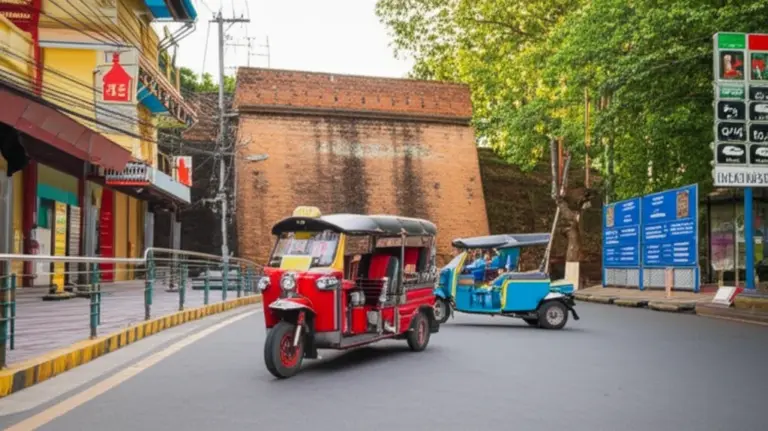
For shorter distances and a truly iconic Thai experience, hop into a tuk-tuk. These three-wheeled auto-rickshaws are faster and more direct than songthaews for specific point-to-point journeys. Always negotiate the price before you start your ride, as drivers often quote higher fares for tourists. Tuk-tuks are ideal for quick dashes across neighborhoods, especially in the evening when traffic is lighter.
Ride-Hailing Apps (Grab, Bolt)
For convenience, transparency, and often better pricing, ride-hailing apps like Grab and Bolt are indispensable. Similar to Uber, these apps allow you to book cars or motorbikes with fixed prices, eliminating the need for negotiation. Grab is widely used and offers various services, including GrabCar, GrabBike, and even GrabFood for deliveries. Bolt often provides slightly cheaper fares, making it a popular alternative. Both are excellent choices, particularly for longer distances, airport transfers, or late-night travel.
Motorbike Rentals: Freedom on Two Wheels
Renting a motorbike offers unparalleled freedom to explore Chiang Mai and its surrounding areas at your own pace. Numerous rental shops are available, with prices starting from around 150-300 THB per day. However, exercise extreme caution: traffic can be chaotic, and accidents are common. Ensure you have an international driving permit, wear a helmet, and have travel insurance that covers motorbike accidents. Only rent a motorbike if you are an experienced rider comfortable with Southeast Asian traffic conditions.
Taxis & Private Cars
While not as common for street hails as in Bangkok, metered taxis are available, particularly at the airport and major hotels. For pre-booked comfort, especially for day trips or transfers, private car services are an excellent option. Many tour operators and hotels can arrange these, offering air-conditioned comfort and knowledgeable drivers.
Public Buses & Minivans
Chiang Mai has a local bus system, though it’s less comprehensive and often less utilized by tourists compared to other options. There are also minivans that serve routes to nearby towns and attractions. While affordable, they can be less flexible and may require some understanding of local routes.
Walking & Cycling
The Old City, with its flat terrain and compact layout, is highly walkable and cycling-friendly. Exploring on foot allows you to discover hidden temples, charming cafes, and local street art. Bicycle rentals are readily available, offering a leisurely way to see the sights within the city walls.
Exploring Chiang Mai’s Distinct Neighborhoods
Chiang Mai’s charm lies in its diverse neighborhoods, each offering a unique atmosphere and set of attractions. Understanding how to navigate each area enhances your exploration.
Old City: A Walled Wonderland
Encased by ancient walls and a moat, the Old City is Chiang Mai’s historical and cultural heart. It’s home to countless temples, guesthouses, and traditional markets.
- Walking: Most attractions are within easy walking distance.
- Cycling: Rent a bicycle for a leisurely exploration of the narrow sois (alleys).
- Songthaews & Tuk-Tuks: Readily available for longer distances within or just outside the walls.
- Grab/Bolt: Convenient for specific pick-ups and drop-offs.
Nimmanhaemin: Trendy & Modern
Known as ‘Nimman,’ this chic neighborhood west of the Old City is the hub of Chiang Mai’s modern culture. It’s filled with trendy cafes, boutiques, art galleries, and upscale restaurants.
- Walking: Nimman is quite walkable, especially along its main streets and connecting sois.
- Grab/Bolt: Essential for getting to and from Nimman, and for longer distances within the area or to other parts of the city.
- Motorbike Rental: Popular among residents and long-term visitors for navigating the area and venturing further afield.
Night Bazaar: Evening Excitement
Located east of the Old City, the Night Bazaar comes alive as the sun sets. It’s a bustling market offering everything from handicrafts and souvenirs to street food and live entertainment.
- Walking: If your accommodation is nearby, walking is the best way to soak in the atmosphere.
- Songthaews & Tuk-Tuks: Readily available to take you to and from the Night Bazaar from most parts of the city.
- Grab/Bolt: A reliable option for convenient and safe transport, especially after a late night of shopping and dining.
While Chiang Mai is generally welcoming, travelers with accessibility needs may face some challenges. However, with prior planning, a fulfilling visit is certainly possible.
General Accessibility Challenges
Sidewalks can be uneven, narrow, or obstructed, and many older buildings and temples lack ramps or elevators. Public transport like songthaews and tuk-tuks are not designed for wheelchair access.
Accessible Transportation Options
- Private Vans/Taxis: Booking private, larger vehicles offers the most flexibility and space for wheelchairs or mobility aids. Many tour companies can arrange these.
- Grab/Bolt: While not universally accessible, some larger GrabCar options might be suitable, and drivers are generally helpful. Communicate your needs in the app’s chat function after booking.
- Accessible Tours: A growing number of tour operators specialize in accessible travel within Thailand, offering modified vehicles and itineraries.
Tips for Travelers with Mobility Needs
- Plan Ahead: Research hotels and attractions for their accessibility features.
- Communicate: Don’t hesitate to communicate your needs to hotel staff, tour guides, and drivers.
- Consider a Travel Companion: A companion can provide assistance with navigating challenging areas.
- Flexibility: Be prepared for some improvisation, as infrastructure can vary.
Chiang Mai in 2025 offers a myriad of ways to explore its enchanting beauty. Whether you prefer the local charm of a songthaew, the convenience of a ride-hailing app, or the freedom of a motorbike, understanding these options will empower you to navigate the city with confidence. By considering the unique characteristics of each neighborhood and being mindful of accessibility, you’re set for an unforgettable journey through Northern Thailand’s cultural capital. Enjoy your travels!
| Transportation Type | Pros | Cons | Cost (approx.) |
|---|---|---|---|
| Songthaew | Authentic, cheap for short distances | Flexible routes, may take longer | 30-50 THB/trip |
| Tuk-Tuk | Fast, iconic experience | Need to negotiate, can be pricey | 80-200 THB/trip |
| Grab/Bolt | Convenient, fixed price, safe | May be slightly more expensive than local options | 80-300 THB/trip (depending on distance) |
| Motorbike Rental | Freedom, flexibility | Dangerous traffic, requires license & experience | 150-300 THB/day |
| Walking/Cycling | Free, immersive, good for Old City | Limited range, weather dependent | Free / 50-100 THB/day (rental) |
คำถามที่พบบ่อย (FAQ)
Here are some frequently asked questions about getting around Chiang Mai:
Is Grab or Bolt better in Chiang Mai?
Both Grab and Bolt are widely used and reliable in Chiang Mai. Grab generally has a larger network of drivers and offers more service types (like GrabFood), while Bolt often provides slightly cheaper fares. It’s recommended to have both apps installed to compare prices and availability for the best option at any given time.
Do I need an international driving permit to rent a motorbike in Chiang Mai?
Yes, legally, you need an international driving permit (IDP) with a motorcycle endorsement to rent and ride a motorbike in Thailand. While some rental shops may not ask for it, police checkpoints are common, and riding without an IDP can result in fines and invalidate your travel insurance in case of an accident.
How much does a songthaew cost in Chiang Mai?
The cost of a songthaew ride in Chiang Mai can vary. For short distances within the city, especially within the Old City or to nearby areas, fares typically range from 30 to 50 THB per person. For longer distances or specific destinations, you’ll need to negotiate the price with the driver before you get in.
Is Chiang Mai walkable?
The Old City area of Chiang Mai is very walkable, with many temples, guesthouses, and restaurants located close to each other. Nimmanhaemin is also fairly walkable. However, for traveling between different neighborhoods or to attractions outside these core areas, you will likely need to use other forms of transportation.
Can I get around Chiang Mai with a wheelchair?
Navigating Chiang Mai with a wheelchair can present challenges due to uneven sidewalks and a lack of universal accessibility in public transport and older buildings. However, with planning, it is manageable. Using private vans/taxis, communicating with Grab/Bolt drivers, and looking into accessible tour operators can significantly improve the experience. Always confirm accessibility with accommodations and attractions in advance.
References
For more information on getting around Chiang Mai, consider these helpful resources:
- How Do You Get Around Chiang Mai? – Exploring Southeast Asia (YouTube)
- Tourism Authority of Thailand (Official Website)
- Chiang Mai Attractions 2025: The Ultimate Guide to Must-See Sights, Seasonal Events, and Practical Travel Tips
- Top 10 Chiang Mai attractions in 2025 — what’s new this year, best times to visit, and how to plan your itinerary
- Cultural experiences and festivals in Chiang Mai 2025 — temples, Lanna traditions, Yi Peng & Loy Krathong updates, and respectful visitor etiquette