How to Plan a Coffee Farm Tour: Transportation, Local Guides, Eco-Friendly Practices, and Costs
- How to Plan a Coffee Farm Tour: Transportation, Local Guides, Eco-Friendly Practices, and Costs
- Discovering Thailand’s Coffee Heartland
- Mastering the Logistics: Transportation & Accommodation
- The Value of Local Guides and Community Engagement
- Ensuring an Eco-Friendly and Ethical Tour
- Budgeting Your Thai Coffee Farm Adventure (Costs)
- คำถามที่พบบ่อย (FAQ)
- Which region in Thailand is best for Arabica coffee tours?
- Are farm tours typically expensive?
- How can I ensure my visit is eco-friendly?
- Do I need to book tours far in advance?
Thailand, often globally recognized for its beaches and vibrant cities, has quietly cultivated a world-class specialty coffee industry, especially in the northern mountains. For tourists seeking authentic, sustainable experiences beyond the usual path, a well-planned coffee farm tour is an unforgettable adventure. This comprehensive guide details every step, from navigating local transport to ensuring your visit supports eco-friendly practices.
Discovering Thailand’s Coffee Heartland
The first step in planning your coffee farm tour is selecting the right region. Thai coffee is broadly divided into two main zones, each offering distinct flavors and tour experiences.
Northern Thailand: The Arabica Belt
The highlands of Chiang Mai and Chiang Rai are the historical and geographical heart of Thai Arabica production. Farms here, often run by ethnic hill tribe communities, focus on high-altitude, shade-grown beans. Doi Chang, Doi Tung, and areas around Mae Hong Son are particularly famous for offering structured tours that detail the journey from bean to cup.
Key Harvesting Season
The best time to see the coffee trees laden with ripe cherries and observe the processing is typically between November and February. Visiting during this ‘peak season’ allows for the most hands-on experience.
Southern Gems: Robusta and Coastal Coffee
While less famous for tours, the Southern provinces like Chumphon and Ranong are major producers of Robusta coffee, which thrives in warmer climates. These tours often focus more on volume production and the robust flavor profile used extensively in local Thai iced coffee preparations.
Mastering the Logistics: Transportation & Accommodation
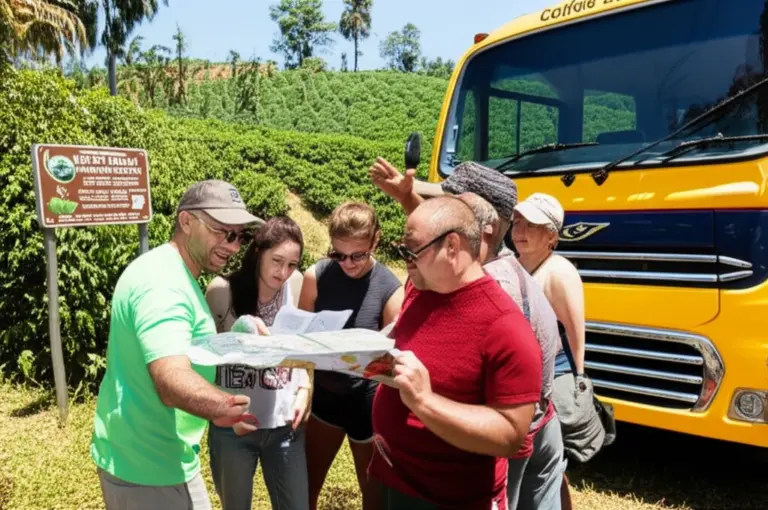
Getting There: Self-Drive vs. Guided Transport
Accessing remote coffee farms requires careful transportation planning. Many farms are located high in the mountains, accessible via winding, steep roads.
| Option | Pros | Cons |
|---|---|---|
| Self-Drive (Car/Scooter) | Maximum flexibility, cost-effective for groups. | Requires familiarity with mountain driving; insurance necessary. |
| Pre-Arranged Tour Van | Safety, comfort, local driver handles navigation. | Higher cost, fixed itinerary. |
| Public Transport + Local Taxi | Budget-friendly for the main leg. | Limited frequency, difficulty finding return transport from remote areas. |
Local Connectivity: Songthaews and Scooter Rentals
In Northern hubs like Chiang Mai, you can often hire a Songthaew (red truck taxi) for a full day. Negotiate the rate upfront and ensure the driver is familiar with the mountain roads leading to the specific farm you wish to visit. Scooter rental is popular but only recommended for experienced riders due to the challenging terrain.
Where to Stay: Homestays and Farm Stays
For the most authentic experience, look for farm stays or community-run homestays located directly on or near the coffee plantations. These accommodations offer deep cultural insight, often include farm-to-table meals, and drastically reduce the need for daily travel logistics. Booking these specialized stays often involves contacting the farm directly or using community-based tourism platforms.
The Value of Local Guides and Community Engagement
While a DIY approach to a coffee farm tour saves money, hiring a local guide, especially one from the community hosting the farm, significantly enhances the experience and ensures ethical engagement.
Why Hire a Local Expert?
- Language and Access: Guides bridge the language barrier (Thai/Hill Tribe dialects) and provide access to areas of the farm or village otherwise restricted to tourists.
- Cultural Insight: They offer context on the history of coffee cultivation in the region, often replacing opium cultivation as a sustainable livelihood.
- Direct Economic Support: Their fees directly support the local economy, aligning with responsible tourism principles.
Ensuring an Eco-Friendly and Ethical Tour
Eco-Friendly Practices are paramount when visiting agricultural sites. Thailand’s coffee industry is increasingly focused on sustainability, moving away from chemical-heavy farming methods.
Sustainable Practices to Look For
-
Shade-Grown Certification
Look for farms that cultivate coffee under a canopy of native trees, which protects biodiversity and eliminates the need for intensive irrigation. Ask about their processing methods (e.g., natural, washed, honey).
-
Water and Waste Management
Observe how they handle coffee pulp and wastewater. Sustainable farms often reuse pulp as fertilizer or compost and have closed-loop water systems.
-
Fair Trade and Direct Trade
Prioritize farms that explicitly state they operate on fair trade or direct trade principles, ensuring farmers receive a premium price for their high-quality beans.
Minimizing Your Footprint
As a tourist, your actions matter. Carry a reusable water bottle, refuse single-use plastics, and always ask permission before taking photographs of people or private property. Buying coffee directly from the farm is the best way to support their business model.
Budgeting Your Thai Coffee Farm Adventure (Costs)
The cost of a coffee farm tour can vary widely depending on the region, the level of guidance, and how remote the farm is. Here is a general breakdown of expected expenses (in Thai Baht, THB).
Breakdown of Typical Costs
| Expense Item | Estimated Cost (per person) | Notes |
|---|---|---|
| Farm Entry/Basic Tour Fee | 50 – 200 THB | Often includes a basic coffee tasting. |
| Specialized Workshop (e.g., Roasting) | 500 – 1,500 THB | Half-day hands-on experience. |
| Accommodation (Homestay/Farm Stay) | 700 – 1,500 THB per night | Includes dinner and breakfast. |
| Private Local Guide (Full Day) | 1,500 – 3,000 THB | Price for the guide, not per person (split cost). |
| Transport (Round Trip from City Hub) | 1,000 – 2,500 THB | Hiring a Songthaew or private car for a day trip. |
Pro Tip: If you purchase coffee beans or products directly from the farm, the tour fee is sometimes waived or discounted. Always budget extra for purchasing souvenirs and high-quality beans to take home.