How to Communicate Your Food Allergies in Thai: Key Phrases, Allergy Cards, and Restaurant Staff Tips to Avoid Cross-Contamination
- How to Communicate Your Food Allergies in Thai: Key Phrases, Allergy Cards, and Restaurant Staff Tips to Avoid Cross-Contamination
- Why Clear Communication is Crucial for Food Allergies in Thailand
- Essential Thai Phrases for Food Allergies
- The Power of Food Allergy Cards in Thai
- Tips for Communicating with Restaurant Staff
- Avoiding Cross-Contamination in Thai Kitchens
- Additional Strategies for Safe Eating in Thailand
- คำถามที่พบบ่อย (FAQ)
- Is it generally safe to eat street food in Thailand if I have severe food allergies?
- How important is it to carry a professionally translated allergy card in Thai?
- What should I do if a restaurant staff member in Thailand doesn’t seem to understand my allergy concerns even with an allergy card?
- References
Thailand is a dream destination for many, known for its vibrant culture, stunning landscapes, and, of course, its incredible food. However, for travelers with food allergies, navigating the culinary scene can be a source of anxiety. The good news is that with the right preparation and communication strategies, you can safely enjoy the diverse flavors of Thai cuisine. This comprehensive guide will equip you with the knowledge to confidently Communicate Your Food Allergies in Thai, ensuring a safer and more enjoyable trip.
Why Clear Communication is Crucial for Food Allergies in Thailand
Thai food is celebrated for its complex flavors, often achieved through a blend of ingredients that might not be immediately obvious. Dishes frequently contain nuts, shellfish, soy, and gluten, even in unexpected places. Language barriers and cultural differences in food preparation can exacerbate the risk of accidental exposure. Therefore, clear, unambiguous communication is not just a convenience; it’s a critical safety measure for anyone with dietary restrictions or severe allergies.
Essential Thai Phrases for Food Allergies
Learning a few key phrases can make a significant difference. While not everyone will understand English, a genuine attempt to speak Thai will often be met with appreciation and effort to help. Here are some vital phrases:
General Allergy Declarations
- ฉันมีอาการแพ้… (Chăn mī ākān pâe…) – I have an allergy to…
- ฉันแพ้… (Chăn pâe…) – I am allergic to…
- อันตรายมาก! (Antarāi mâak!) – Very dangerous!
- ถ้าฉันกิน…ฉันจะป่วยมาก. (Tâa chăn gin… chăn jà bpùay mâak.) – If I eat… I will get very sick.
Specific Allergy Phrases
| Allergy | Thai Phrase | Pronunciation (approx.) |
|---|---|---|
| Peanuts | ถั่วลิสง (tùua lí-sǒng) | too-ah lee-song |
| Tree Nuts | ถั่วเปลือกแข็ง (tùua bplùueak kâeng) | too-ah pluek kaeng |
| Seafood | อาหารทะเล (ā-hǎan tá-lay) | ah-harn ta-lay |
| Shellfish | หอย (hǒy) | hoy |
| Shrimp / Prawns | กุ้ง (gûng) | goong |
| Fish | ปลา (bplaa) | plaa |
| Gluten / Wheat | กลูเตน / แป้งสาลี (glu-dten / bpâeng sǎa-lǐi) | gloo-ten / paeng saa-lee |
| Dairy / Milk | นม (nom) | nom |
| Eggs | ไข่ (kài) | kai |
| Soy / Soy Sauce | ถั่วเหลือง / ซีอิ๊ว (tùua lǔeang / sī-íw) | too-ah leuang / see-ew |
Requesting Ingredient Omissions
- ไม่ใส่… (Mâi sài…) – Do not put in…
- กรุณาไม่ใส่… (Gà-rú-nā mâi sài…) – Please do not put in…
Asking About Cross-Contamination
- มี…ในนี้ไหม? (Mī… nai ní mái?) – Is there… in this?
- ใช้กระทะ/น้ำมันแยกได้ไหม? (Chái grà-tá/náam-man yâek dâai mái?) – Can you use a separate pan/oil?
The Power of Food Allergy Cards in Thai
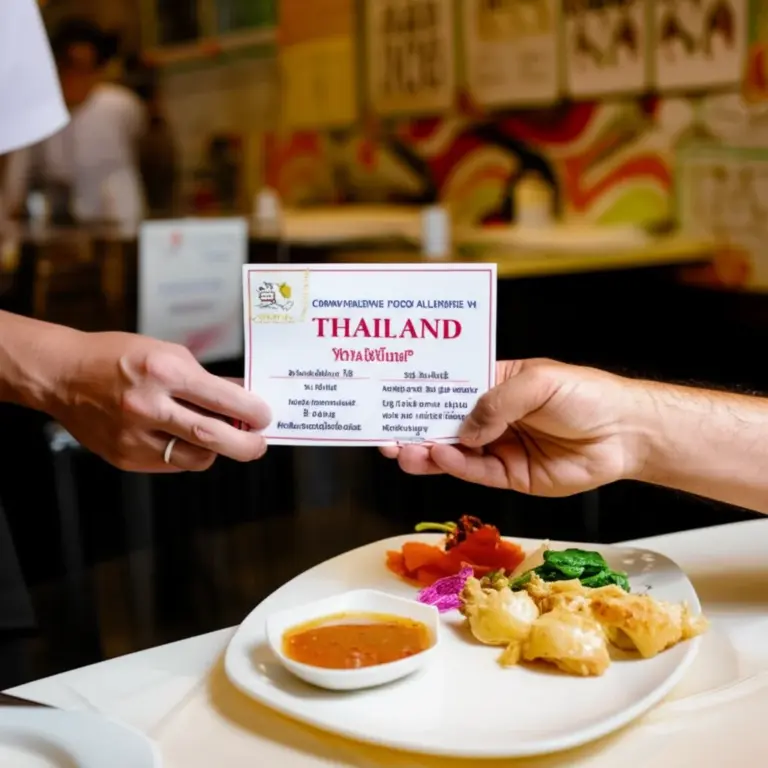
An allergy card is your most reliable tool to Communicate Your Food Allergies in Thai effectively. It’s a small, laminated card written in clear, concise Thai that explains your allergies and the severity of your reaction. This bypasses potential pronunciation issues and ensures that crucial information is conveyed accurately.
How to Create an Effective Allergy Card
- Professional Translation: Do not rely on Google Translate for something this critical. Invest in a professional translation service specializing in medical or dietary information.
- Clear Language: The card should be easy to read, with large fonts.
- Specific Allergens: List all your allergens clearly.
- Severity: State that your allergy is severe and can cause a life-threatening reaction (e.g., anaphylaxis).
- Cross-Contamination Warning: Explicitly request separate cooking utensils, cutting boards, and oil to prevent cross-contamination.
- Emergency Instructions: Briefly state what to do in case of a reaction (e.g., call emergency services).
Tips for Communicating with Restaurant Staff
Even with an allergy card, your interaction with staff is key. Here’s how to maximize your chances of a safe meal:
- Choose Wisely: Opt for established restaurants over very casual street food stalls when you have severe allergies. Higher-end hotels and restaurants are often more accustomed to international guests and dietary requests.
- Speak Slowly and Clearly: Present your allergy card immediately upon ordering. Point to the specific allergens.
- Ask Clarifying Questions: Even if they nod, ask questions like, “So, no peanuts at all?” to confirm understanding.
- Check Your Food: Before taking the first bite, do a visual check. If anything looks suspicious or smells like an allergen, politely ask for clarification.
- Be Patient and Polite: A friendly demeanor goes a long way. Remember, they are trying to help you.
- Hotel Staff/Tour Guides: Utilize your hotel concierge or a trusted tour guide to help translate or call ahead to restaurants on your behalf.
Avoiding Cross-Contamination in Thai Kitchens
Cross-contamination is a major concern. Many Thai dishes are cooked in woks, and it’s common for woks and utensils to be quickly rinsed, not thoroughly cleaned, between dishes. Shared deep-frying oil is also prevalent.
- Request Separate Preparation: Your allergy card should explicitly ask for separate cooking surfaces and utensils.
- Focus on Simpler Dishes: Dishes that are less complex and made to order from scratch might be safer than pre-prepared items or curries with many ingredients.
- Consider Specific Eateries: Some restaurants, particularly those catering to Western tourists or with clear English menus, might be more adept at handling allergy requests. Vegan or vegetarian restaurants can sometimes be a good option, but always verify ingredients.
- Street Food Caution: While iconic, street food often involves shared equipment and ingredients, making it high-risk for severe allergies. Exercise extreme caution or avoid if your allergies are life-threatening.
Additional Strategies for Safe Eating in Thailand
Beyond communication, proactive measures can further enhance your safety:
- Research in Advance: Look up restaurants online that are known to be allergy-friendly or have good reviews from other travelers with allergies.
- Carry Emergency Medication: Always have your EpiPen/Adrenaline Auto-Injector, antihistamines, and any other necessary medications readily available and know how to use them.
- Pack Safe Snacks: Bring a supply of non-perishable, safe snacks from home, especially for travel days or when dining options are limited.
- Learn Local Emergency Numbers: Know how to call for medical help (1669 for medical emergencies in Thailand).
- Consider Self-Catering: Staying in accommodation with kitchen facilities allows you to prepare some of your own meals, offering maximum control over ingredients.
Traveling with food allergies doesn’t mean you have to miss out on the incredible experience of Thailand. By proactively learning how to Communicate Your Food Allergies in Thai, preparing allergy cards, and implementing smart dining strategies, you can minimize risks and fully immerse yourself in the beauty and flavors of this amazing country. Enjoy your trip safely!
คำถามที่พบบ่อย (FAQ)
References
- Gluten-Free and Allergy-Safe Restaurants in Chiang Mai 2025: Complete Guide for Travelers with Celiac, Nut, Dairy & Egg Allergies
- Where to Find Certified Gluten-Free and Allergy-Friendly Restaurants in Chiang Mai (Neighborhoods, Certification, and How to Verify Safety)
- Top Allergy-Safe Menus and Dishes to Try in Chiang Mai 2025 — Vegan, Dairy-Free, Nut-Free, and Egg-Free Options with Price Ranges