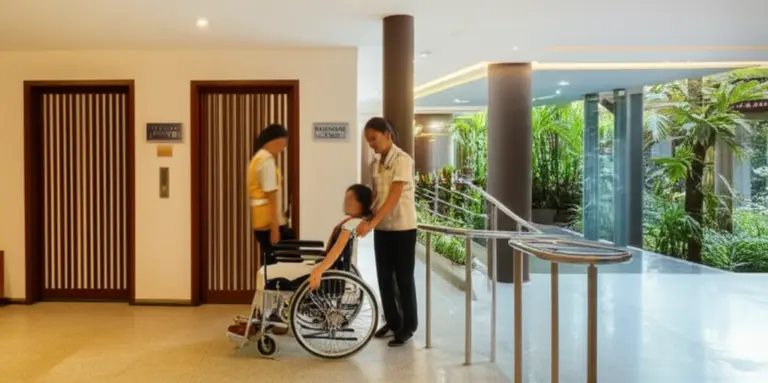
What Makes a Hotel Truly Wheelchair-Friendly in Chiang Mai: Ramps, Roll-in Showers, Accessible Rooms, Elevators, Staff Training, and ADA-Equivalent Features
- What Makes a Hotel Truly Wheelchair-Friendly in Chiang Mai: Ramps, Roll-in Showers, Accessible Rooms, Elevators, Staff Training, and ADA-Equivalent Features
- Beyond the Label: Understanding True Accessibility
- The Physical Infrastructure Checklist for Wheelchair Users
- Bathroom Bliss: The Importance of Roll-In Showers and Grab Bars
- Staff Training: The Unseen Pillar of Hospitality
- ADA Equivalents and Local Context in Thailand
- Practical Verification: Ensuring Your Booking is Accurate
- คำถามที่พบบ่อย (FAQ)
Planning a trip to the cultural heart of Northern Thailand requires meticulous attention to accessibility. While many establishments in Chiang Mai market themselves as accessible, travelers using wheelchairs need assurance that the accommodation meets rigorous standards. Determining what makes a hotel **truly wheelchair-friendly Chiang Mai hotels** involves looking far beyond a simple checklist; it requires assessing physical infrastructure, operational procedures, and genuine staff commitment. This guide details the critical features you must verify before booking your stay in the Rose of the North.
Beyond the Label: Understanding True Accessibility
The term ‘accessible’ can be subjective. A hotel might have one room with a slightly wider door, yet lack proper maneuvering space or accessible public areas. True accessibility is holistic. For travelers relying on mobility aids, this means seamless navigation from the lobby to the pool, the restaurant, and, most importantly, the private guest room. We evaluate accessibility based on international standards adapted for the Thai context, focusing on features that ensure independence and safety.
The Physical Infrastructure Checklist for Wheelchair Users
The built environment dictates usability. If the physical structure presents barriers, no amount of staff training can compensate.
Ramps and Entryways: The First Hurdle
For ground-level entry or navigating slight inclines, ramps are essential. Look for:
- Slope Gradient: Ideally, the ramp slope should be gentle (no steeper than 1:12 ratio, as per international guidelines). Steep ramps are dangerous for manual wheelchair users.
- Surface Material: Surfaces must be non-slip, even when wet, and free of large gaps or cracks that could catch caster wheels.
- Handrails: Continuous handrails on both sides are necessary for users who can transfer or require support.
Elevators: The Lifeline of Multi-Story Hotels
If the hotel has multiple floors, the elevator system is non-negotiable. Crucially, accessible rooms are often located on lower floors, but guests must be able to reach common amenities like the rooftop bar or business center.
- Sufficient Cab Size: The elevator must accommodate a wheelchair, often with space for an assistant to maneuver.
- Clear Button Access: Controls must be reachable from a seated position, often mounted lower than standard. Braille markings are a bonus for low-vision users.
- Reliability: Ask if the hotel has backup power or procedures if the elevator fails, especially if accessible rooms are only on upper floors.
Accessible Guest Rooms: The Heart of the Stay
The room itself must offer true independence. This goes beyond just a wider door opening.
- Maneuvering Space: There must be clear, unobstructed turning circles (at least 5 feet or 1.5 meters) around the bed, desk, and in front of the closet.
- Bed Height: The bed height should allow for easy transfer from a wheelchair (ideally between 20-24 inches high).
- Clearance Under Sink/Desk: Knee and toe clearance beneath the bathroom vanity and any writing desk is essential for approaching them while seated.
Tip for Chiang Mai: Older boutique guesthouses within the Old City walls often have limited accessibility due to original architecture. Focus your search on newer, international-standard resorts or major chain hotels.
Bathroom Bliss: The Importance of Roll-In Showers and Grab Bars
The bathroom is often the single biggest point of failure in accessibility claims. A step into a shower or a toilet positioned too close to a wall renders a room unusable.
The Roll-In Shower Standard
A true roll-in shower has no threshold or lip separating the bathroom floor from the shower floor. This allows a wheelchair to roll directly in. Key features include:
- A handheld shower wand on an adjustable-height bar.
- Adequate space for a shower chair or bench (which the hotel must provide).
- Non-slip flooring within the shower area.
Grab Bars and Toilet Height
Grab bars must be securely mounted, correctly positioned (both horizontal and vertical supports), and sturdy enough to support body weight. Toilets in accessible rooms should be slightly higher than standard (comfort height) to facilitate transfers.
Staff Training: The Unseen Pillar of Hospitality
Even the most perfectly designed room fails if staff are untrained or hesitant. This is where E-E-A-T shines—demonstrating expertise in service.
Staff at **truly wheelchair-friendly Chiang Mai hotels** are trained not just on where accessible features are, but how to assist respectfully:
- Understanding how to safely operate accessible features (e.g., transferring pool lifts).
- Knowing the precise dimensions of accessible routes within the property.
- Communicating proactively without making assumptions about the guest’s capabilities.
ADA Equivalents and Local Context in Thailand
The Americans with Disabilities Act (ADA) sets a high bar. While Thailand does not strictly enforce ADA, many modern, high-end hotels developing for international clientele adhere closely to these standards because they recognize the global market demand. Look for hotels that reference international guidelines rather than relying solely on vague local building permits. Trustworthiness is built on transparent communication regarding compliance levels.
Practical Verification: Ensuring Your Booking is Accurate
Never rely solely on website photos. Always contact the hotel directly and ask specific questions:
- “Can you confirm the exact measurements of the doorway clearance into the bathroom?”
- “Is the shower truly a zero-entry, roll-in design?”
- “Can you describe the staff training protocol regarding mobility assistance?”
To illustrate the importance of detailed planning, here is a short clip discussing accessible travel experiences in the region:
By prioritizing these detailed physical features and assessing staff preparedness, travelers can confidently select **truly wheelchair-friendly Chiang Mai hotels** and ensure their Northern Thai adventure is comfortable, dignified, and memorable.
คำถามที่พบบ่อย (FAQ)
Here are answers to common questions regarding accessibility in Chiang Mai accommodations.
References
For further reading on international accessibility benchmarks:
- U.S. Access Board Guidelines (For reference on international standards)
- Resources for Accessible Travel in Thailand
- Accessible Hotels in Chiang Mai 2025: Top Wheelchair-Friendly Picks and How to Choose Them
- Best Neighborhoods and Accessible Hotels in Chiang Mai (Old City, Nimmanhaemin, Riverside) — where to stay for convenience and attractions
- Detailed Reviews of Top Wheelchair-Accessible Hotels in Chiang Mai 2025: room layouts, accessibility ratings, photos, pricing, and booking tips