Top Local Dishes and Quick Bites to Try Before Temple Visits — authentic Thai breakfasts, vegetarian options, and timing tips
- Top Local Dishes and Quick Bites to Try Before Temple Visits — authentic Thai breakfasts, vegetarian options, and timing tips
- Understanding Temple Timing and Morning Rituals
- Authentic Thai Breakfast Staples (Ahaan Chao)
- Excellent Vegetarian Options for Temple Preparation
- Timing Your Meal: The Golden Window for Temple Visits
- Navigating Food Near Major Bangkok Wats
- คำถามที่พบบ่อย (FAQ)
- Is it okay to eat meat before visiting a Buddhist temple?
- What is the most essential rule regarding food near sacred areas?
- Are there specific vegetarian Thai breakfasts that are easy to find?
- What should I drink with my Thai breakfast?
Welcome, travelers! Visiting Thailand’s magnificent temples (Wats) is a highlight of any trip, but navigating the early morning schedule and respecting local customs—especially regarding food—requires some insider knowledge. This guide focuses on the Top Local Dishes and Quick Bites to Try Before Temple Visits, ensuring you fuel up authentically, respectfully, and on time. We’ll cover everything from traditional Thai breakfasts to excellent vegetarian choices, helping you prepare for a spiritually rich morning.
Understanding Temple Timing and Morning Rituals
Thai temples generally open early, often before 8:00 AM, to accommodate both local worshippers and early tourists. The key to enjoying your visit without rushing your meal is precise timing. Most authentic local breakfast stalls begin setting up between 6:00 AM and 7:00 AM. If you plan to arrive at a major temple like Wat Arun or Wat Pho by 8:30 AM, aim to finish your meal by 7:45 AM. Rushing your food is discouraged, as eating quickly can sometimes be perceived as disrespectful when near sacred grounds. Expert Tip: Always check the specific opening hours for the Wat you plan to visit, as some smaller, regional temples may have different schedules.
Authentic Thai Breakfast Staples (Ahaan Chao)
The Thai breakfast is often savory, hearty, and distinctly different from Western concepts. These are the dishes you should seek out near any major temple complex:
1. Jok (Rice Porridge)
Jok is the quintessential Thai comfort breakfast. It is a creamy, slow-cooked rice porridge, often served with a soft-boiled egg, minced pork, ginger slivers, and seasoned with soy sauce and white pepper. It’s warm, easy to digest, and perfect for a gentle start to a long day of sightseeing. Look for street vendors who specialize only in Jok; their pots have been simmering all night!
2. Khao Tom (Rice Soup)
A lighter cousin to Jok, Khao Tom is a clear, savory rice soup, usually containing chicken (Khao Tom Gai) or fish (Khao Tom Pla). It is seasoned simply, allowing the freshness of the ingredients to shine. This is an excellent choice if you prefer something less heavy than Jok but still want a traditional warm meal.
3. Pa Thong Ko (Thai Doughnuts)
These deep-fried crullers are often enjoyed alongside either Jok or Khao Tom, or dipped into condensed milk for a sweeter treat. They are widely available early in the morning and provide a quick, satisfying carbohydrate boost. They are universally beloved quick bites.
4. Sticky Rice with Savory Toppings
You will often see small bundles of sticky rice wrapped in banana leaves. These can be paired with grilled pork (Moo Ping) or shredded dried fish. This is the ultimate grab-and-go option for those truly pressed for time before an early temple opening.
Excellent Vegetarian Options for Temple Preparation
For travelers observing Buddhist precepts or simply preferring plant-based meals, finding suitable, authentic food is easy, especially in areas surrounding major Wats. The concept of ‘Jay’ (เจ), the Thai equivalent of veganism/vegetarianism, is widely understood.
Vegetarian Focus: Jay Food
Look for stalls displaying yellow flags with red Thai characters (เจ). Jay food strictly excludes meat, eggs, dairy, and often pungent items like garlic and onions. A vegetarian version of Jok, often made with mushrooms and tofu instead of pork, is a fantastic, safe bet. Many street vendors are happy to substitute ingredients upon request.
Quick Bites: Fruit and Snacks
If you need something light and quick, fresh tropical fruit is abundant. Mangoes, dragon fruit, and bananas are always available. For a slightly more substantial vegetarian bite, look for Khanom Krok (coconut pancakes)—these small, sweet cups are typically vegetarian-friendly (check for eggs if strictly vegan). We recommend trying these refreshing options from local markets.
Timing Your Meal: The Golden Window for Temple Visits
Successfully combining breakfast and temple viewing hinges on respecting the morning rhythm. Here is a suggested schedule for an optimal experience:
- 6:30 AM – 7:15 AM: Seek out your breakfast stall. This is when vendors are fully set up but haven’t hit the peak rush.
- 7:15 AM – 7:45 AM: Enjoy your meal slowly. Sip your Thai iced coffee (or hot tea) and watch the morning begin.
- 7:45 AM – 8:00 AM: Use the restroom (if available nearby) and prepare your attire. Remember, knees and shoulders must be covered for temple entry.
- 8:00 AM Onwards: Arrive at the temple grounds. You’ll beat the main tourist bus crowds and witness the quieter, more serene atmosphere.
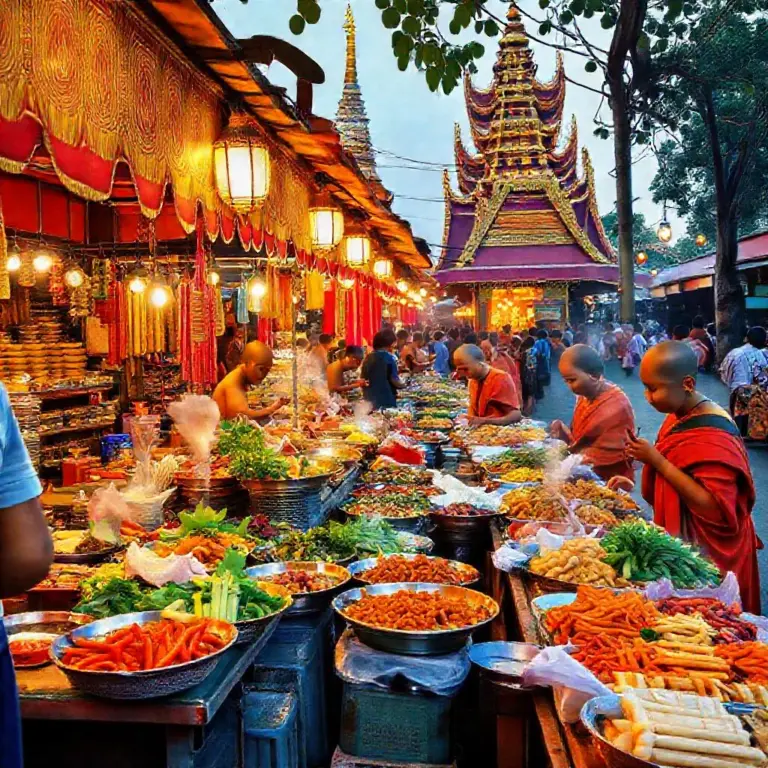
To give you a visual taste of the incredible street food culture surrounding these early morning rituals, take a look at this helpful guide:
While food stalls are everywhere, proximity to specific temples can dictate what you find. For instance, the area around Wat Pho and the Grand Palace is highly tourist-oriented, meaning you might find slightly higher prices or more Westernized options. Conversely, venturing just a few blocks away into the local alleys often reveals the best, most authentic Top Local Dishes and Quick Bites to Try Before Temple Visits.
| Temple Area | Best Morning Find | Notes |
|---|---|---|
| Wat Arun (Temple of Dawn) | Boat Noodles (small portions) | Often found on the adjacent piers slightly later, but look for small stalls selling quick rice dishes nearby. |
| Wat Pho (Reclining Buddha) | Jok & Pa Thong Ko | High concentration of established, excellent morning vendors on the streets leading to the main entrance. |
| Wat Saket (Golden Mount) | Khao Man Gai (Chicken Rice) | More local residential area means more traditional, non-tourist-focused stalls open early. |
Remember, the best way to find exceptional food is to follow the locals. If a small stall has a line of Thai people forming at 6:30 AM, you’ve found a winner!
คำถามที่พบบ่อย (FAQ)
References
- Breakfast Near Temples 2025: Best Early-Opening Cafés and Street Breakfasts Around Tha Phae Gate
- Where to Find Early-Opening Breakfast Spots Near Tha Phae Gate in 2025 — maps, hours, and neighborhood overview
- Best Cafés and Stalls Open at Dawn Around Tha Phae — curated list with addresses, travel time from Tha Phae, and price ranges