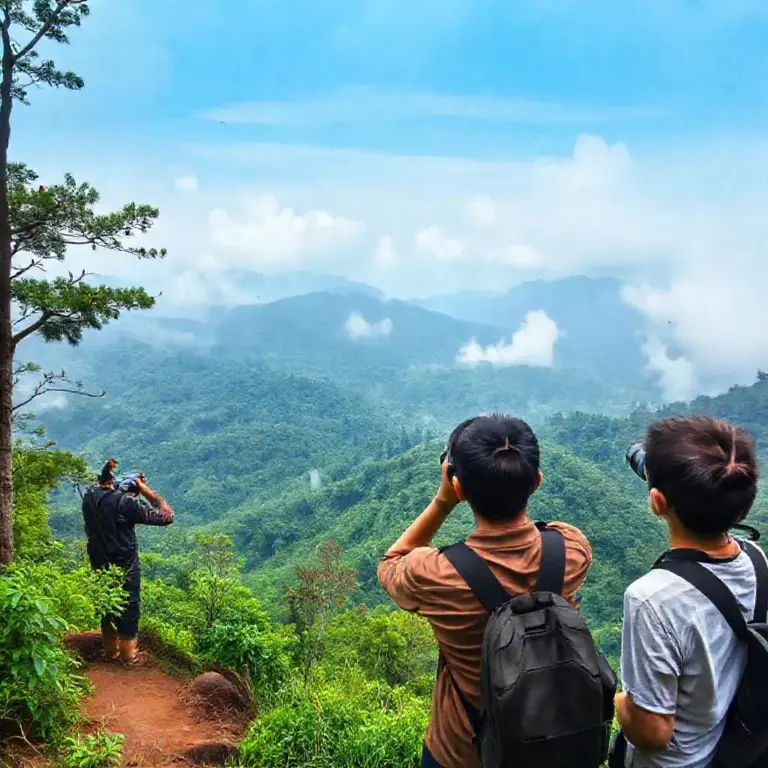
Best Trails, Viewpoints, and Local Guides for Spotting Birds on Doi Inthanon
- Best Trails, Viewpoints, and Local Guides for Spotting Birds on Doi Inthanon
- Understanding the Doi Inthanon Birding Ecosystem
- The Best Trails for Spotting Birds on Doi Inthanon
- Essential Viewpoints for Canopy Observation
- Hiring Local Guides: Maximizing Your Birding Success
- Target Species: What to Look For
- Essential Gear and Planning for Your Trip
- Ethical Birding Practices on Doi Inthanon
- คำถามที่พบบ่อย (FAQ)
Doi Inthanon, the ‘Roof of Thailand,’ is not just a destination for stunning panoramic views; it is a globally recognized biodiversity hotspot and a paradise for ornithologists. For those seeking the **Best Trails, Viewpoints, and Local Guides for Spotting Birds on Doi Inthanon**, this guide offers an expert walkthrough to maximize your chances of encountering rare montane species. The sheer altitude variation creates unique microclimates, hosting an incredible array of endemic and migratory birds.
Our focus here is on providing actionable, E-E-A-T-driven advice, ensuring your birding trip to Chiang Mai’s crown jewel is successful and ethical.
Understanding the Doi Inthanon Birding Ecosystem
Doi Inthanon National Park spans several distinct ecological zones, each supporting different avian communities. Successful birding requires understanding where to look based on the time of day and altitude. The park boasts over 380 recorded species, making preparation crucial.
Key Altitudinal Zones for Birding
The best trails are those that traverse these zones efficiently:
- Lower Montane Forest (Below 1,400m): Rich in mixed species, often found closer to villages and lower access roads.
- Upper Montane Cloud Forest (1,800m – Summit): The prime habitat for high-altitude specialists and the most sought-after species.
- Kew Mae Pan Area: Famous for its open, shrubby areas contrasting with dense forest patches.
The Best Trails for Spotting Birds on Doi Inthanon
Choosing the right trail often means choosing between accessibility and the chance to see true rarities. Here are the top contenders recommended by seasoned local guides.
1. Kew Mae Pan Nature Trail (The Classic)
While famous for its stunning views, the edges of the Kew Mae Pan trail offer excellent birding opportunities, especially in the transition zones. Look for mixed-species flocks moving through the canopy. Remember, access is often restricted, and hiring a local guide is mandatory here, which doubles as a birding advantage.
2. Ang Ka Luang Nature Trail (Summit Area)
This short, accessible boardwalk trail near the summit visitor center is crucial for high-altitude species. Early morning is best. This is often the spot where birders look for the rare Chestnut-tailed Minivet or the White-browed Scimitar Babbler. Patience here pays dividends.
3. The Road to Wachirathan Waterfall (Lower Elevations)
For species that prefer slightly warmer, lower cloud forest environments, the roads leading toward the main waterfalls (like Wachirathan) offer pull-offs where you can scan the roadside scrub and lower canopy. This is generally easier for novice birders.
Essential Viewpoints for Canopy Observation
To spot the elusive canopy dwellers, you need elevation. These viewpoints offer clear sightlines above the dense undergrowth.
The Twin Pagodas (Phra Mahathat Naphamethanidon & Phra Mahathat Naphapholphumisiri)
The viewing platforms near the pagodas provide excellent vantage points over the surrounding forest canopy. Bird activity often peaks just after sunrise here as the mist burns off. Bring binoculars!
Doi Inthanon Royal Project Visitor Center Area
While commercialized, the periphery of the visitor center often attracts feeding stations (unofficial but common practice) or provides clearings where birds can be seen moving between feeding grounds.
Expert Tip: The Dawn Chorus
The absolute best time for bird activity across all **Best Trails, Viewpoints, and Local Guides for Spotting Birds on Doi Inthanon** is the first hour after sunrise (approximately 6:00 AM to 7:30 AM). Plan your ascent accordingly.
Hiring Local Guides: Maximizing Your Birding Success
While self-guided exploration is possible, hiring a specialized local guide transforms a good birding trip into an exceptional one. They possess intimate knowledge of bird calls, current flock locations, and the necessary permits for restricted trails.
Why a Local Guide is Essential
| Advantage | Benefit for Birding |
|---|---|
| Call Recognition | Identifying hidden species by sound alone. |
| Trail Access | Permits for Kew Mae Pan and restricted forest areas. |
| Target Species | Knowing the current territories of rare endemics. |
Guides affiliated with the National Park Office or reputable local associations are recommended for ethical and reliable service.
Target Species: What to Look For
Doi Inthanon is famous for its high-altitude specialists. Keep your field guides handy for these must-see birds:
- Gurney’s Pitta: Extremely shy, look in dense, damp undergrowth.
- Yellow-throated Fulvetta: Often seen in mixed flocks in the upper montane forest.
- Ashy Minivet: Look for them foraging in the mid-canopy.
- White-browed Scimitar Babbler: Common in dense thickets, identified by its distinctive call.
For a visual guide to the incredible birdlife, check out this short video showcasing the region:
Essential Gear and Planning for Your Trip
Proper preparation is key to enjoying the **Best Trails, Viewpoints, and Local Guides for Spotting Birds on Doi Inthanon** comfortably.
Checklist for Birders
- High-quality waterproof binoculars (essential due to frequent mist).
- Warm layers—temperatures near the summit can drop below freezing.
- Waterproof camera gear.
- Sturdy, waterproof hiking boots.
- Insect repellent (especially for lower elevations).
Where to Stay and Base Your Trip
Most birders base themselves either in the small community near the park entrance or further down in Mae Klang area. Booking accommodation close to the park entrance allows for very early morning starts, crucial for maximizing bird activity.
Ethical Birding Practices on Doi Inthanon
As a responsible tourist exploring this delicate ecosystem, always adhere to National Park regulations. Never bait birds excessively, keep noise levels low, and stay strictly on marked trails to protect the habitat of sensitive species like the Gurney’s Pitta.
Location Overview Map
To help orient your journey through the park:
คำถามที่พบบ่อย (FAQ)
Here are answers to common questions regarding bird spotting in this area.
What is the best time of year for bird watching on Doi Inthanon?
The peak season generally runs from November to March, which coincides with cooler weather and the arrival of migratory species. However, resident birds are present year-round.
Are there specific permits needed besides the National Park fee?
Yes, access to certain high-altitude trails, like Kew Mae Pan, requires a registered local guide, even if you are only birding. This is mandatory for visitor safety and environmental protection.
Can I spot the rare Gurney’s Pitta on Doi Inthanon?
While difficult, Doi Inthanon remains one of the best places in Thailand to attempt to see this species. Success usually requires an experienced local guide who knows their specific feeding territories.
What is the minimum altitude for seeing endemic montane birds?
Most of the unique montane species begin appearing consistently above 1,400 meters, with the highest concentrations found above 1,800 meters near the summit forest.
References
For further reading on Thai ornithology and park regulations: