Motorbike Rental Rules 2025: Permits — What Tourists Need to Know Before You Rent in Thailand
- Motorbike Rental Rules 2025: Permits — What Tourists Need to Know Before You Rent in Thailand
- Understanding the Legal Permit Requirements
- New Enforcement Trends for 2025
- Safety Gear and Local Traffic Laws
- What to Check Before Signing the Rental Agreement
- คำถามที่พ่อยบ่อย (FAQ)
- Can I rent a motorbike with a digital driving license?
- What happens if the police stop me without an IDP?
- Does my car license allow me to ride a 125cc scooter?
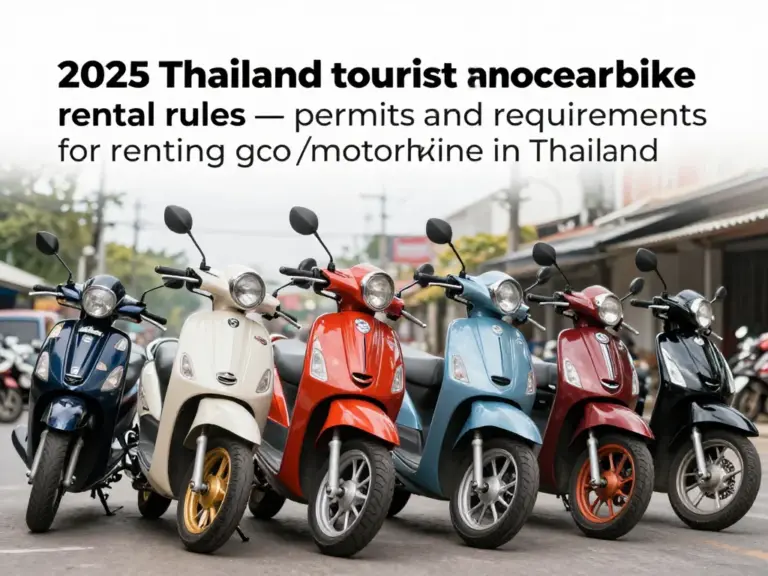
Riding a scooter through the winding roads of Chiang Mai or along the coastlines of Phuket is a quintessential Thailand experience. However, the Motorbike Rental Rules 2025 have become stricter to address road safety concerns. For tourists, understanding the legal landscape is no longer optional—it is essential to avoid heavy fines, deportation risks, or being left without insurance coverage in the event of an accident.
Understanding the Legal Permit Requirements
The most common misconception among tourists is that a standard car license from their home country is sufficient. In 2025, the Royal Thai Police and the Department of Land Transport (DLT) are strictly enforcing the requirement for a valid motorcycle endorsement. To ride legally, you must possess an International Driving Permit (IDP) specifically under the 1949 or 1968 Convention, which must clearly show a ‘Category A’ (motorcycle) stamp.
- Home License: Must have a motorcycle endorsement.
- IDP: Must be carried alongside your original passport and original license.
- ASEAN Residents: Citizens of ASEAN countries can use their domestic licenses, provided they are in English or translated.
New Enforcement Trends for 2025
Under the Motorbike Rental Rules 2025, checkpoints are more frequent in tourist hubs like Pattaya, Samui, and Bangkok. If caught without a proper permit, fines have been adjusted upwards. Furthermore, rental agencies are now being held more accountable. While some small shops might still rent to you with just a passport, doing so puts you at extreme legal risk. Without the correct permit, your travel insurance is almost certainly void.
Insurance Warning
Even if you have the best premium travel insurance, they will deny any claim involving a motorbike accident if you were riding without a valid license and IDP recognized by Thai law.
Safety Gear and Local Traffic Laws
Helmets are mandatory for both riders and passengers. In 2025, police are utilizing CCTV and AI-powered cameras to issue tickets for helmet violations. Additionally, remember that Thailand drives on the left side of the road. Standard speed limits in urban areas are generally 50 km/h, though often ignored by locals, tourists are frequent targets for speeding enforcement.
| Requirement | Status | Notes |
|---|---|---|
| Helmet | Mandatory | Both rider and passenger. |
| IDP (Cat A) | Mandatory | Must match home license. |
| Passport | Required | Copy is usually sufficient for police, but shops need the original for verification. |
| Insurance | Highly Recommended | Check for ‘Motorcycle’ coverage. |
What to Check Before Signing the Rental Agreement
Before you ride off, perform a thorough inspection of the vehicle. Take photos and a video of every scratch and dent. Ensure the ‘Por Ror Bor’ (compulsory government insurance) sticker is valid. This sticker is usually found on the front fork or under the seat and proves the vehicle is registered for the current year.
คำถามที่พ่อยบ่อย (FAQ)
References
- Department of Land Transport Thailand
- Tourism Authority of Thailand (TAT) Newsroom
- Ministry of Foreign Affairs Thailand – Visa and Regulations
- What Permits and Licenses Are Required for Tourists Renting a Motorbike in Thailand (Thai License, International Driving Permit, and Conversions)
- How to Obtain and Validate an International Driving Permit (IDP) and Your Home Country License for Legal Riding in Thailand 2025
- Renting Safely: How to Check Rental Agency Permits, Insurance Coverage, and Contract Clauses to Avoid Fines and Liability