Top Must-Try Dishes, Vegan-Friendly Menus, and Local Thai Plant-Based Specialties
- Top Must-Try Dishes, Vegan-Friendly Menus, and Local Thai Plant-Based Specialties
- The Evolution of Thai Plant-Based Cuisine
- Must-Try Vegan Thai Dishes
- Navigating Vegan-Friendly Menus Across Thailand
- Local Thai Plant-Based Specialties to Look For
- คำถามที่พบบ่อย (FAQ)
- Is it easy to find vegan food in Thailand?
- What does the ‘Jay’ symbol mean?
- How do I order vegan food if I don’t speak Thai?
Embarking on a journey through Thailand is a feast for the senses. While the country is globally renowned for its street food culture often centered around meats and seafood, there is a burgeoning culinary revolution happening across the kingdom. For the conscious traveler, navigating the Top Must-Try Dishes, Vegan-Friendly Menus, and Local Thai Plant-Based Specialties is easier and more rewarding than ever before. From bustling Bangkok night markets to the serene hills of Chiang Mai, plant-based eating has deep roots in Thai culture, particularly during the annual Vegetarian Festival (Tesakarn Gin Jay).
The Evolution of Thai Plant-Based Cuisine
Thailand’s relationship with plant-based eating is not a modern trend but a historical practice. Buddhist traditions and the influence of Chinese cuisine have long prioritized tofu, vegetables, and mushrooms. Today, Thailand is positioning itself as a premier destination for vegans and vegetarians. Whether you are looking for high-end dining or authentic street food, the variety of flavors—spicy, sour, sweet, and salty—remains intact, simply reimagined through plant-based ingredients.
Must-Try Vegan Thai Dishes
When exploring Thailand, you don’t have to sacrifice flavor to maintain a vegan diet. Many classic dishes can be easily modified by simply asking for ‘Jay’ (vegan/vegetarian) or ‘Mai Sai Nam Pla’ (no fish sauce). Here are the essential dishes you need to experience:
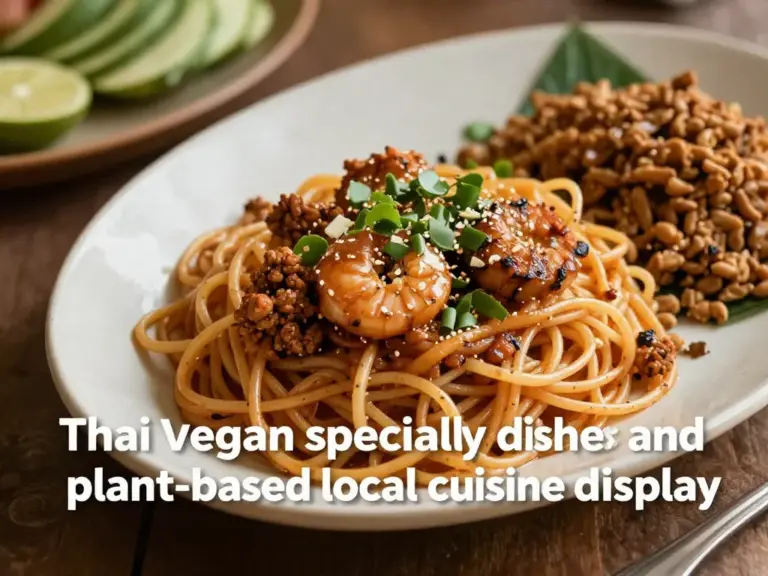
- Pad Thai Jay: The quintessential noodle dish. Ensure you request it without egg and fish sauce, substituting with soy sauce or mushroom sauce.
- Som Tum Jay: This iconic green papaya salad is naturally vegan if you ask for no dried shrimp and no fish sauce. Ask for lime juice and soy sauce instead for that perfect tang.
- Tom Yum Hed: A spicy, sour mushroom soup that is naturally rich in flavor. It is a staple for plant-based travelers.
- Khao Soi Jay: A Northern Thai specialty. This creamy coconut curry noodle soup is divine when made with tofu and served with pickled mustard greens.
In cities like Chiang Mai and Bangkok, you will find an abundance of dedicated plant-based cafes. However, even in smaller towns, you can find local markets offering fresh fruit, sticky rice, and grilled sweet potatoes. The key is to communicate clearly. Carrying a small translation card with Thai phrases for “no fish sauce” (Mai Sai Nam Pla) and “no meat” (Mai Sai Neua Sat) can be a lifesaver.
Local Thai Plant-Based Specialties to Look For
Beyond the standard dishes, Thailand offers unique ingredients that turn plant-based meals into gourmet experiences. The Tourism Authority of Thailand often highlights the use of local mushrooms like ‘Hed Khon’ and the versatility of jackfruit, which is often used in curries to mimic the texture of meat. Do not miss out on trying mango sticky rice, a naturally vegan dessert that is the perfect end to any Thai meal.