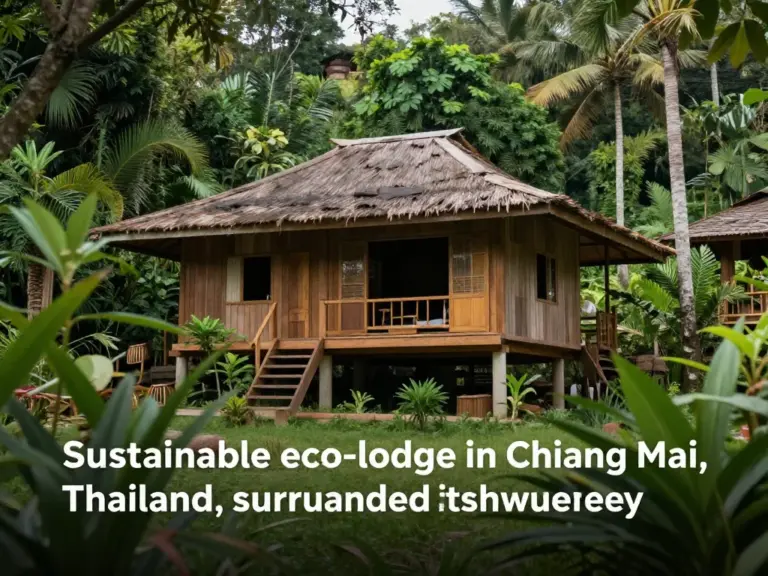
What Makes an Eco-Lodge in Chiang Mai Truly Sustainable in 2025?
As travelers become increasingly conscious of their environmental footprint, the definition of “green” hospitality is evolving rapidly. In 2025, simply avoiding single-use plastics is no longer enough to claim environmental stewardship. When searching for a truly sustainable eco-lodge in Chiang Mai, discerning travelers must look deeper into the operational philosophy, community integration, and long-term ecological impact of the property.
Chiang Mai, with its lush mountains and rich cultural heritage, is at the forefront of this shift. This guide explores the core pillars that define authentic sustainability in Northern Thailand’s hospitality sector today.
The Core Pillars of Sustainability in 2025
To identify a genuine eco-lodge, one must evaluate how the establishment interacts with its immediate environment and the local community. It is a holistic approach that moves beyond aesthetics to substantive action.
1. Renewable Energy and Resource Efficiency
A leading eco-lodge in Chiang Mai in 2025 integrates renewable energy sources, such as solar panels, into its infrastructure. Furthermore, advanced water management systems, including greywater recycling and rainwater harvesting, are essential. These lodges prioritize passive cooling designs—using natural ventilation and local insulating materials—to minimize the need for energy-intensive air conditioning.
2. Community Integration and Social Responsibility
True sustainability is not just environmental; it is social. Does the lodge employ local staff from surrounding hill tribe villages? Do they source food from nearby organic farms? A sustainable lodge acts as an economic engine for the local region, ensuring that tourism dollars directly benefit the people who call Chiang Mai home. The Tourism Authority of Thailand emphasizes that community-based tourism is the backbone of future travel.
3. Waste Management and Circular Economy
Moving towards a zero-waste goal is the gold standard. This involves on-site composting of organic waste, banning all single-use plastics, and prioritizing bulk amenities over individual sachets. The most advanced lodges in Northern Thailand are now implementing “circular” systems where garden waste becomes fertilizer for the kitchen, which then feeds the guests.
Evaluating Your Choice: What to Look For
When booking your stay, don’t just rely on the term “eco-friendly” in the marketing copy. Look for third-party certifications like the Global Sustainable Tourism Council (GSTC) criteria. These certifications audit properties based on rigorous standards.
| Feature | Greenwashing | True Sustainability |
|---|---|---|
| Energy | Changing towels once a day | Solar power & passive cooling |
| Community | Donations to random charities | Fair wages & local sourcing |
| Waste | “Recycling” bins (rarely used) | On-site composting & zero-waste |
คำถามที่พบบ่อย (FAQ)
What is the difference between an eco-lodge and a regular hotel?
An eco-lodge is specifically designed to minimize environmental impact through sustainable architecture, resource management, and social responsibility, whereas a regular hotel focuses primarily on guest convenience and luxury without necessarily prioritizing ecological conservation.
Are eco-lodges in Chiang Mai more expensive?
Not necessarily. While some luxury eco-resorts command higher prices, there is a wide range of affordable eco-friendly homestays and lodges that offer competitive rates while maintaining high sustainability standards.
How can I verify if a lodge is truly sustainable?
Look for certifications from recognized bodies like the GSTC or Green Destinations. Additionally, check their website for detailed sustainability policies rather than just generic “green” marketing buzzwords.
Do sustainable lodges offer modern comforts?
Yes, most modern sustainable lodges in Chiang Mai offer high levels of comfort, including Wi-Fi, hot water, and comfortable bedding, proving that you do not need to sacrifice luxury to be environmentally responsible.