Where Can Travelers Find the Best Modern Lanna Tasting Menus in Chiang Mai and Beyond?
For culinary adventurers journeying through Northern Thailand, the search for the perfect meal often leads to the cultural heart of the region: Chiang Mai. While traditional street food stalls offer an authentic taste of local heritage, a new wave of gastronomy is reshaping the landscape. Travelers seeking Modern Lanna Tasting Menus in Chiang Mai and Beyond will find themselves at the intersection of ancient recipes and avant-garde culinary techniques. This evolution in Northern Thai cuisine elevates humble ingredients—fermented soybeans, wild herbs, and mountain-grown vegetables—into sophisticated, multi-course experiences that rival the world’s best fine-dining establishments.
The Evolution of Northern Thai Fine Dining
Lanna cuisine, characterized by its bitter, spicy, and earthy flavor profiles, has historically been a home-cooked affair. However, the recent rise of modern Lanna tasting menus has brought these flavors into the spotlight of global gastronomy. Chefs in Chiang Mai are now treating regional staples like Khao Soi (curry noodle soup) and Sai Oua (spicy sausage) not just as comfort food, but as canvases for artistic expression. By using locally sourced, seasonal produce and refined plating techniques, these establishments provide a narrative-driven dining experience that honors the Lanna kingdom’s past while embracing future culinary trends.
Top Destinations for Modern Lanna Tasting Menus
If you are planning a trip to Northern Thailand, narrowing down where to eat is crucial. Here are some of the most highly regarded venues that specialize in elevating Northern Thai heritage.
1. Cuisine de Garden
Located on the outskirts of Chiang Mai, Cuisine de Garden is renowned for its nature-inspired tasting menus. The chefs here focus on a farm-to-table philosophy, crafting dishes that reflect the local forest and mountain environment. The menu changes with the seasons, ensuring that every visit offers a unique perspective on Lanna ingredients.
2. R.Haan (Bangkok with Northern Influence)
While based in Bangkok, R.Haan is essential for those looking for the pinnacle of Thai fine dining. Their tasting menus frequently incorporate Northern Thai techniques and ingredients, showcasing how Lanna flavors are interpreted at the highest level of culinary craft. It is a perfect ‘beyond Chiang Mai’ option for travelers traversing the country.
3. The Service 1921 Restaurant & Bar
Housed in a historical building that once served as the British Consulate, this venue offers a colonial-era atmosphere paired with modern Lanna-inspired dishes. It is an excellent choice for travelers who appreciate architectural history alongside their tasting menu.
What to Expect from a Northern Thai Tasting Menu
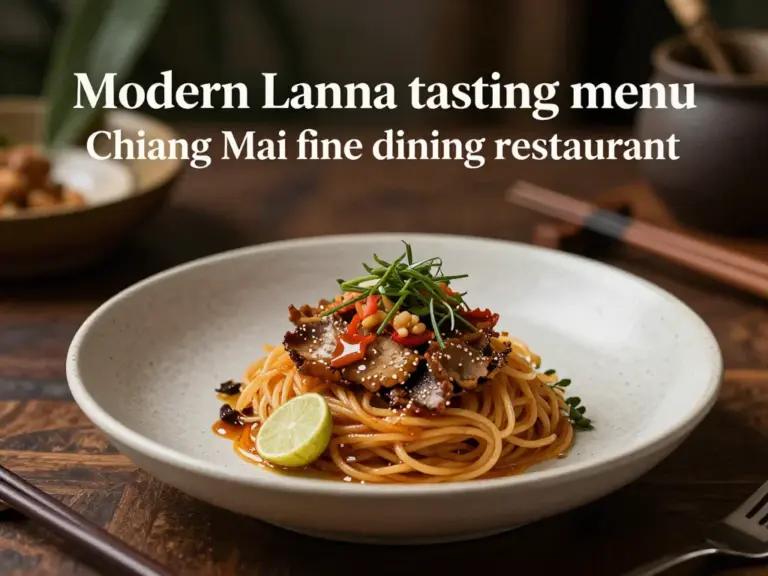
A typical modern Lanna tasting menu is a journey through the region’s geography. You can expect courses that highlight local staples like sticky rice, Nam Prik Ong (tomato-based chili dip), and fresh river fish. Unlike standard à la carte dining, these menus are curated by the chef to balance textures, temperatures, and spice levels. Expect a progression from light, refreshing appetizers to rich, curry-laden main courses, often finished with a dessert that utilizes native fruits or palm sugar.
| Course Type | Typical Lanna Ingredient Focus |
|---|---|
| Appetizer | Fresh herbs, edible flowers, local mushrooms |
| Soup | Clear herbal broths, fermented soybean pastes |
| Main Course | Slow-cooked meats, aromatic northern spices |
| Dessert | Coconut, sticky rice, tropical fruits |
คำถามที่พบบ่อย (FAQ)
Yes, many high-end restaurants in Chiang Mai are very accommodating to dietary restrictions. If you contact them in advance, they can usually curate a vegetarian or vegan version of their tasting menu that maintains the integrity of Lanna flavors.
How much should I budget for a fine-dining experience in Chiang Mai?
Prices vary significantly, but for a high-quality tasting menu, expect to pay between 1,500 THB to 4,500 THB per person, excluding alcohol pairings. It is a premium experience that reflects the quality of ingredients and the skill of the culinary team.
Is there a dress code for these restaurants?
While Chiang Mai is generally casual, fine-dining establishments typically suggest ‘smart casual’ attire. Avoid flip-flops and beachwear to ensure you are comfortable in the upscale environment of these modern Lanna venues.
What is the best time of year to visit for food tourism in Chiang Mai?
The cool season (November through February) is the peak time for culinary tourism in Northern Thailand. The weather is pleasant for dining, and it coincides with the harvest season, meaning many restaurants feature special menus highlighting fresh, local seasonal produce.