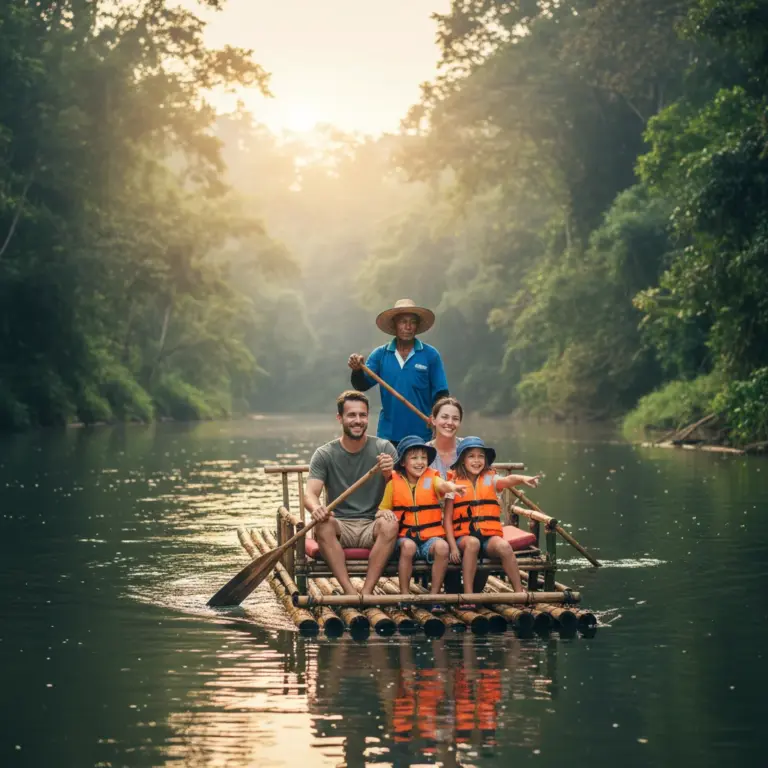
Is Bamboo Rafting Safe for Kids? Age Limits, Safety Gear, and Family-Friendly Operator Standards
- Is Bamboo Rafting Safe for Kids? Age Limits, Safety Gear, and Family-Friendly Operator Standards
- Understanding Bamboo Rafting in Thailand: Tradition vs. Tourism
- Assessing the Risks: When Is Bamboo Rafting Safe for Kids?
- Establishing Clear Age Limits and Height Requirements
- Essential Safety Gear Checklist for Family Rafting Trips
- Vetting Family-Friendly Operator Standards in Thailand
- Video Guide: Experiencing Thailand’s Rivers Safely
- Conclusion: Making Informed Decisions for Your Family Adventure
- คำถามที่พบบ่อย (FAQ)
- What is the safest time of year for bamboo rafting with children in Thailand?
- Can I bring my own child’s life jacket?
- Are there alternatives to bamboo rafting for families with toddlers?
- How long does a typical family bamboo rafting trip last?
- What should I do if the guide seems inexperienced?
- References
Bamboo rafting is one of Thailand’s most iconic and serene outdoor experiences, often offering a magical journey through lush jungles and tranquil waterways, particularly popular in regions like Chiang Mai and Kanchanaburi. For families planning an adventure, the immediate question arises: Is Bamboo Rafting Safe for Kids? While the activity can be profoundly rewarding, safety must be the paramount concern. As an expert guide to Thai tourism, this comprehensive review will detail the necessary precautions, common age limits, required safety gear, and the standards you must demand from local operators to ensure a wonderful, worry-free trip for your children.
Understanding Bamboo Rafting in Thailand: Tradition vs. Tourism
Bamboo rafting in Thailand is deeply rooted in local culture, traditionally used for transporting goods or local travel. Modern tourism has adapted this method, often involving guided trips down relatively calm rivers. However, the perception of ‘calm’ can be deceptive, as river conditions are entirely dependent on the season and the specific water body.
What is Traditional Bamboo Rafting?
Traditional rafts are constructed from stacked bamboo poles, guided by one or two local oarsmen using long bamboo poles to navigate the current. While inherently stable on flat water, they lack the robust safety features of modern inflatable rafts.
The Difference Between Guided Tours and Independent Rafting
For families, choosing a reputable, established guided tour is non-negotiable. Independent or semi-independent rafting, sometimes offered as a cheaper alternative, drastically increases risk as you rely solely on the structural integrity of the raft and the local knowledge of the guide, without the oversight of established tourism standards.
Assessing the Risks: When Is Bamboo Rafting Safe for Kids?
The safety assessment hinges primarily on the river environment. A slow, wide river in the dry season presents minimal risk, whereas a narrow, fast-moving river during the monsoon season is entirely unsuitable for young children.
Water Conditions and River Flow
Always inquire about the current water level. Heavy rains upstream can turn a gentle float into a rapid run in minutes. Operators must prioritize safety over completing the scheduled route. If the river looks turbulent, do not proceed.
Inherent Dangers (Submerged Obstacles, Rapids)
The main danger on bamboo rafts is falling into the water. Bamboo rafts cannot easily stop or maneuver around submerged logs or rocks if the current is strong. If a child falls, the risk of impact or being swept away increases significantly.
Expert Insight: For toddlers (under 4), even the calmest bamboo rafting experience carries a high inherent risk due to the lack of secure seating and the immediate proximity to the water’s edge.
Establishing Clear Age Limits and Height Requirements
There is no universal, legally mandated age limit for bamboo rafting across all of Thailand. However, reputable operators establish internal guidelines based on demonstrable safety standards.
Operator Policies vs. Parental Discretion
Many established companies will outright refuse children under 5 or 6 years old for safety reasons, regardless of how calm the river appears. Respect these guidelines. Parental discretion should only come into play when the child meets the operator’s minimum age and demonstrates the necessary physical stability (i.e., can sit upright unassisted for extended periods).
Best Practices for Toddlers and Infants
For infants and toddlers (under 3), bamboo rafting is generally discouraged. The required harness or flotation device for this age group is often insufficient for the movement and potential impact associated with river travel on a bamboo structure. Consider river cruises or slow boat tours instead.
Essential Safety Gear Checklist for Family Rafting Trips
Even on the calmest trips, proper equipment is essential. If an operator does not provide the following, you must question their commitment to safety.
Life Jackets: Sizing and Certification (Crucial!)
This is the single most important piece of equipment. Children must wear US Coast Guard (or equivalent international standard) approved Personal Flotation Devices (PFDs) that fit snugly. A life jacket designed for an adult worn by a child is not safe.
| Age Group | Safety Requirement | Check for |
|---|---|---|
| 0–2 Years | Generally discouraged | Infant-specific PFD (if allowed) |
| 3–8 Years | Mandatory PFD | Snug fit around chest and crotch straps |
| 9+ Years | Mandatory PFD | Proper buoyancy rating |
Sun Protection and Emergency Kits
The tropical sun is relentless. Ensure children wear wide-brimmed hats, UV-protective clothing, and reef-safe sunscreen applied frequently. Operators should carry a basic first-aid kit capable of handling scrapes and minor cuts.
Vetting Family-Friendly Operator Standards in Thailand
To ensure your family’s experience aligns with high safety benchmarks, you must perform due diligence on the tour company before booking. High-quality operators prioritize safety documentation and guide training.
Questions to Ask Potential Tour Providers
Ask these specific questions directly:
- What is your official minimum age policy for rafting?
- Are your guides certified in basic water rescue or first aid?
- How many adults are on the raft relative to the number of children?
- What is your contingency plan if water levels rise unexpectedly?
Signs of a Trustworthy Operator
Look for companies that:
- Have clear, published safety protocols.
- Use modern, well-maintained safety equipment.
- Are transparent about river conditions and cancellation policies.
- Have positive reviews specifically mentioning family experiences.
Video Guide: Experiencing Thailand’s Rivers Safely
To further illustrate the experience and the necessary precautions, watch this guide on enjoying Thailand’s waterways responsibly with children.
Conclusion: Making Informed Decisions for Your Family Adventure
The answer to ‘Is Bamboo Rafting Safe for Kids?’ is conditional. For older children (8+) on designated calm routes with a highly vetted, professional operator utilizing proper PFDs, it can be a fantastic bonding experience. For younger children, the inherent risks associated with the design of a bamboo raft often outweigh the potential enjoyment. Prioritize E-E-A-T principles in your choice of provider—Experience, Expertise, Authority, and Trustworthiness—to ensure your Thai adventure is safe and memorable for every member of your family. Always err on the side of caution when river safety is involved.
คำถามที่พบบ่อย (FAQ)
Here are answers to common queries regarding family rafting in Thailand.
What is the safest time of year for bamboo rafting with children in Thailand?
The safest time is generally during the dry season, typically between November and February. During this period, river levels are lower, the current is slower, and the risk of flash flooding from monsoon rains is significantly reduced.
Can I bring my own child’s life jacket?
Yes, bringing your own certified life jacket is highly recommended, especially for young children. Even if the operator provides them, having a familiar, perfectly fitted PFD offers superior security.
Are there alternatives to bamboo rafting for families with toddlers?
Absolutely. Many areas offer slow, motorized longtail boat tours on larger, regulated rivers or lakes, or gentle river cruises that provide more stable seating and easier access to safety personnel.
How long does a typical family bamboo rafting trip last?
Most guided bamboo rafting excursions are designed to be relaxing and usually last between 1 to 2 hours, depending on the river section chosen by the operator.
What should I do if the guide seems inexperienced?
If you observe a lack of safety consciousness, such as improper PFD fitting or reckless maneuvering, you have the right to request to disembark immediately at the first safe opportunity. Trust your parental instincts.
References
Official Tourism Authority of Thailand Resources
CDC Guidelines for Travel to Thailand