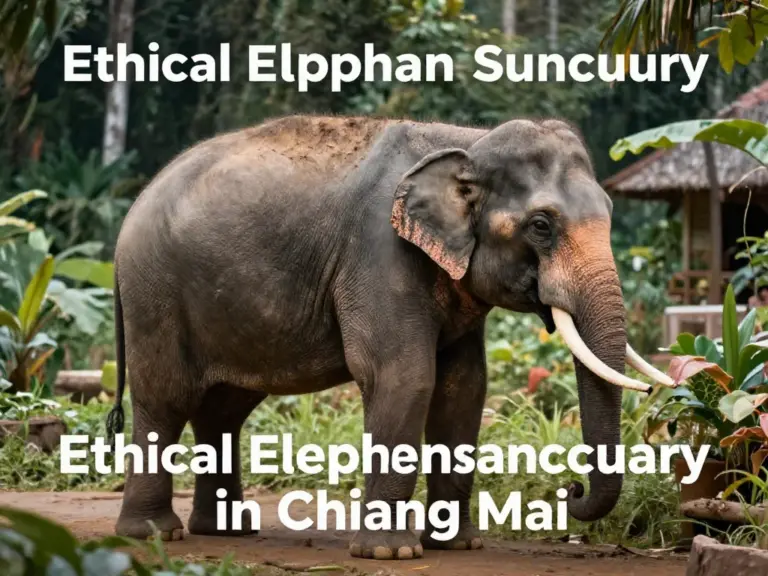
What Makes an Elephant Sanctuary Ethical in Chiang Mai?
When planning a trip to Northern Thailand, understanding What Makes an Elephant Sanctuary Ethical in Chiang Mai is essential for every conscious traveler. As tourism evolves, the demand for interaction with these majestic creatures has shifted from exploitative practices to genuine conservation efforts. An ethical sanctuary focuses on the well-being, freedom, and natural behaviors of elephants rather than entertainment value.
The Pillars of Ethical Elephant Care
To identify a truly ethical sanctuary, you must look for specific indicators of animal welfare. A reputable facility will never offer rides, as the anatomy of an elephant is not designed to support the weight of humans or heavy saddles. Instead, they provide vast, natural environments where elephants can roam, socialize, and forage for food in groups that mimic their natural wild structures.
Understanding the ‘No-Ride’ Policy
The transition away from elephant riding is the cornerstone of modern conservation. Ethical sanctuaries in Chiang Mai often house rescued elephants that have suffered through years of logging or trekking industries. These animals require rehabilitation, and forcing them to carry tourists hinders their physical and psychological recovery. By choosing facilities that explicitly ban riding, you contribute to the global movement of protecting these sentient beings from unnecessary trauma.
How to Vet a Sanctuary Before Visiting
Before booking your visit, conduct thorough research. Check if the sanctuary has a clear mission statement regarding conservation and education. A transparent organization will be open about where their elephants come from and how they are treated. Look for facilities that offer educational tours, explaining the biology of elephants and the history of their rescue, rather than just photo opportunities.
คำถามที่พบบ่อย (FAQ)
| Question | Answer |
|---|---|
| Can I bathe with the elephants? | Most truly ethical sanctuaries have moved away from elephant bathing, as it can be stressful for the animals and often involves forced proximity. Observation is preferred. |
| How can I tell if a sanctuary is lying? | If they offer rides, circus-style tricks, or keep elephants chained for long hours, it is not an ethical sanctuary. |
| Why are rescued elephants in sanctuaries? | Many are retired from the logging industry, tourism trekking, or illegal trafficking, and are unable to survive in the wild on their own. |
References
- World Animal Protection – Elephant Welfare
- Tourism Authority of Thailand – Responsible Tourism Guidelines