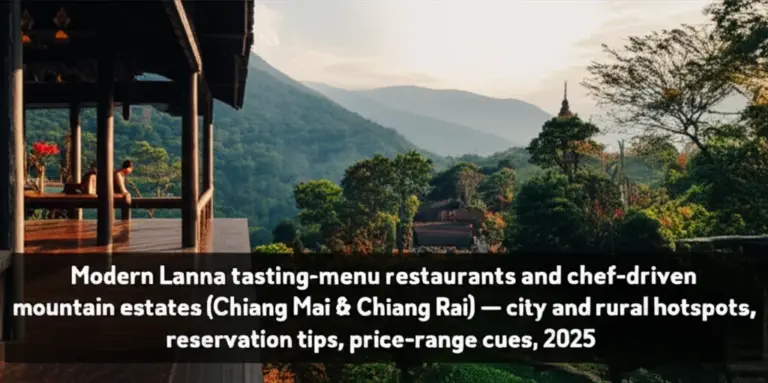
Top Restaurants and Chef-Driven Experiences Serving Modern Lanna Tasting Menus in 2025 (city and rural hotspots — Chiang Mai, Chiang Rai, mountain estates — reservation tips and price ranges)
- Top Restaurants and Chef-Driven Experiences Serving Modern Lanna Tasting Menus in 2025 (city and rural hotspots — Chiang Mai, Chiang Rai, mountain estates — reservation tips and price ranges)
Northern Thailand, historically the Kingdom of Lanna, is rapidly becoming one of Asia’s most exciting culinary destinations. The year 2025 marks a pivotal moment where traditional Lanna flavors—characterized by aromatic herbs, fermented ingredients, and a complex interplay of spicy, sour, and salty notes—are being reinterpreted by a new generation of innovative chefs. For the discerning traveler focused on Thailand Tourism, seeking out Modern Lanna Tasting Menus offers an unparalleled journey into the region’s culture and terroir. This guide explores the essential chef-driven experiences in Chiang Mai, Chiang Rai, and their remote mountain counterparts, ensuring your gastronomic itinerary is perfectly planned.
The Evolution of Lanna Gastronomy
The concept of Lanna cuisine has long been associated with rustic, communal dining. However, the ‘Modern Lanna’ movement elevates these humble origins to fine dining standards, focusing on sustainability, rare indigenous ingredients, and sophisticated plating techniques. This shift is driven by chefs who are both historians and innovators, preserving authentic flavors while applying global culinary precision.
What Defines a Modern Lanna Tasting Menu?
A true Modern Lanna tasting menu moves beyond staple dishes like Khao Soi and Sai Oua. It often features:
- Terroir-Driven Ingredients: Sourcing almost exclusively from local farms, focusing on seasonal mountain produce and indigenous herbs like Pak Wan or wild mushrooms.
- Deconstruction & Reimagining: Presenting traditional dishes, such as Nam Prik Ong (chili relish), in a deconstructed format, paired with delicate components.
- Fermentation and Smoke: Utilizing traditional preservation techniques, like bamboo-tube cooking or intricate smoking processes, to deepen flavor profiles.
Expert Insight
Many of the best experiences require booking 3–6 months in advance. These establishments often have limited seating to ensure ingredient quality and personalized service. Always confirm dietary restrictions when booking.
Chiang Mai: The Epicenter of Culinary Innovation (City Hotspots)
Chiang Mai city remains the vibrant heart of Northern Thai fine dining. Here, established chefs and rising stars compete to offer the most compelling Modern Lanna Tasting Menus.
Restaurant Lert (High-End Culinary Concept)
Located in a beautifully restored teak house near the Ping River, Restaurant Lert is known for its 12-course menu dedicated entirely to rice and mountain grains. Chef Somsak focuses on zero-waste cooking and collaborations with ethnic hill tribe farmers. The signature dish, a deconstructed Gaeng Hang Lay pork curry sphere, is a must-try. Their wine pairing often features unique regional spirits and Thai-produced artisanal wines.
The Hidden Kitchen at Nimman
While Nimmanhaemin Road is famous for trendy cafes, The Hidden Kitchen offers a quiet sanctuary. Their six-course tasting menu rotates weekly based on the freshest market finds, emphasizing light, modern interpretations of ancient royal Lanna recipes. The atmosphere is intimate, perfect for a special occasion. Expect dishes that are subtly flavored and visually stunning, demonstrating the versatility of Lanna ingredients.
Chiang Rai & Mountain Estates: Hidden Gems (Rural Hotspots)
For a truly immersive experience, travelers must venture into the lush, cooler climates of Chiang Rai and the surrounding mountain estates. These rural locations often provide a direct farm-to-table connection that city restaurants cannot replicate.
Phu Jai Farm & Table (Chiang Rai)
This destination eatery, located an hour outside Chiang Rai city, operates on a closed-loop system. Diners are encouraged to take a short tour of the organic farm before sitting down to their meal. The tasting menu here is perhaps the most authentic expression of modern Lanna sustainability, with dishes like fermented tea leaf salad (Miang Kham) presented with edible flowers and house-cured river fish. The setting, overlooking rolling hills, is breathtaking.
Experience the Craft: Northern Thai Fine Dining
Watch this short feature to understand the meticulous preparation and presentation involved in creating a high-end Lanna tasting experience:
Source: Culinary Explorations Channel
The Estate Kitchen (Mountain Retreat, near Doi Inthanon)
Nestled high in the mountains near Doi Inthanon, this exclusive kitchen is often part of a boutique luxury resort. Access is challenging but rewarding. The chef here focuses heavily on seasonal foraging and unique ingredients sourced from high-altitude forests. The menus are hyper-seasonal, changing daily, and showcase the deep, earthy flavors typical of mountain cooking, often featuring slow-cooked game or rare jungle vegetables. This is the pinnacle of a chef-driven, destination dining experience.
Essential Guide to Reservations and Pricing (Transactional Tips)
Securing a table at these top establishments requires planning, especially during the high season (November to February). Understanding the price structure is also crucial for budgeting your luxury culinary tour.
Reservation Strategies for 2025
- Book Early: For Michelin-recognized or highly-awarded chefs, reserve 3–6 months out. Use online booking platforms (like Resy or the restaurant’s direct website).
- Mid-Week Advantage: Aim for Tuesday, Wednesday, or Thursday reservations, which are generally easier to secure than weekend slots.
- Confirm Directly: Many rural locations may require a deposit or direct bank transfer confirmation. Always call or email to confirm 48 hours prior.
Price Range Breakdown for Modern Lanna Tasting Menus (Per Person, Excluding Drinks)
| Tier | Experience Level | Price Range (THB) | Price Range (USD Approx.) |
|---|---|---|---|
| Entry/Mid-Range | High-quality 4-6 course menus in CM city | 1,500 – 2,800 THB | $40 – $75 |
| Premium/Chef-Driven | Signature 8-10 course menus in top CM/CR locations | 3,000 – 5,500 THB | $80 – $150 |
| Exclusive/Destination | 12+ courses, hyper-seasonal, remote mountain estates | 6,000 THB+ | $160+ |
Conclusion: Savoring the North
The rise of the Modern Lanna Tasting Menus represents more than just culinary trend; it is a cultural renaissance. By focusing on provenance, tradition, and innovation, these chef-driven experiences offer a deeply satisfying and sophisticated way to connect with the heart of Northern Thailand. Planning your 2025 trip to include one (or more) of these gastronomic adventures will undoubtedly be the highlight of your Thailand Tourism experience.
คำถามที่พบบ่อย (FAQ)
Traditional Lanna cuisine is typically rustic, shared family-style, and heavily relies on fermented soybeans (Tua Nao) and chili relishes (Nam Prik). Modern Lanna tasting menus apply French or Japanese fine dining techniques to these traditional flavors, focusing on individual plating, sophisticated ingredient sourcing, and multi-course progression while still honoring the core regional flavors.
Are these Modern Lanna restaurants vegetarian-friendly?
While Lanna cuisine historically features pork and river fish, many modern establishments, especially those emphasizing farm-to-table dining, are highly accommodating to vegetarian or vegan diets. It is essential to inform the restaurant of your dietary needs at the time of reservation, as the menus are often fixed and require significant advance preparation for substitutions.
The cool season (November to February) is generally considered the peak time for tourism and culinary experiences, offering the widest variety of cool-climate mountain ingredients. However, the rainy season (June to October) yields unique wild mushrooms and jungle vegetables that chefs prize, offering a different, equally compelling seasonal menu.
References
The Global Rise of Northern Thai Cuisine |
Thailand Tourism Authority: Gastronomy Focus
- Northern Tasting Menus 2025: Modern Lanna Cuisine — Where Tradition Meets Avant-Garde in Northern Thailand
- Why Modern Lanna Tasting Menus Are the Must-Experience Food Trend of 2025 (history, cultural roots, and why chefs are reinventing northern Thai flavors)
- What to Expect from a Northern Tasting Menu: Courses, Signature Ingredients, and Seasonal Techniques (course structures, key local ingredients like dok krachiao, gaeng hoh, preservation and fermentation)