Comparing salon vs. standalone massage chairs near Night Bazaar: cost-per-minute, hygiene, and customer reviews
- Comparing salon vs. standalone massage chairs near Night Bazaar: cost-per-minute, hygiene, and customer reviews
- Understanding the Options: Salon Chairs vs. Dedicated Kiosks
- Deep Dive 1: Cost-Per-Minute Analysis (The Wallet Factor)
- Deep Dive 2: Hygiene and Maintenance Standards
- Deep Dive 3: Customer Experience and Review Comparison
- Strategic Decision Making: Which is Right for Your Itinerary?
- คำถามที่พบบ่อย (FAQ)
- Are salon massage chairs near the Night Bazaar generally cleaner than standalone units?
- What is the typical cost range per minute for a massage chair in the tourist areas of Chiang Mai?
- Can I expect similar massage programs in both salon and standalone chairs?
- Is it better to use a chair before or after a full Thai massage?
- References
Welcome to the vibrant heart of Chiang Mai! After a long day exploring temples or hunting for bargains at the famous Night Bazaar, the promise of quick, localized relief is irresistible. For the modern traveler seeking instant gratification without committing to a full-hour traditional Thai massage, automated massage chairs offer a compelling alternative. However, the choice isn’t always straightforward. This comprehensive guide dives deep into the crucial factors when deciding between salon vs. standalone massage chairs near Night Bazaar: dissecting cost-per-minute efficiency, assessing hygiene standards, and weighing aggregated customer reviews to ensure your brief respite is both restorative and trustworthy.
Expert Insight
The best choice heavily depends on your immediate priority: speed and absolute lowest cost (standalone kiosks) versus a potentially more comfortable, vetted environment (salon setups).
Understanding the Options: Salon Chairs vs. Dedicated Kiosks
When navigating the busy tourist corridors around the Night Bazaar, you will encounter two primary models of automated massage service. Understanding their structural differences is key to managing expectations regarding service quality and price consistency.
The Salon Setup: Integrated Services & Atmosphere
Salons offering massage chairs are typically associated with established, full-service massage parlors or even dedicated foot reflexology centers. These chairs are often premium models, integrated into a relaxing atmosphere, perhaps accompanied by soft music or the scent of essential oils. The staff managing the area are trained service providers, which inherently adds a layer of oversight.
The Standalone Kiosk: Speed and Specialization
Standalone units are often found tucked into convenient spots—near convenience stores, outside malls, or directly adjacent to the main Night Bazaar entrance. They operate on a pay-per-use or timed token system. Their main appeal is immediacy; you walk up, pay the attendant (or insert a token), and start instantly. They are specialized for quick, targeted relief, usually focusing on the back, neck, and legs.
Deep Dive 1: Cost-Per-Minute Analysis (The Wallet Factor)
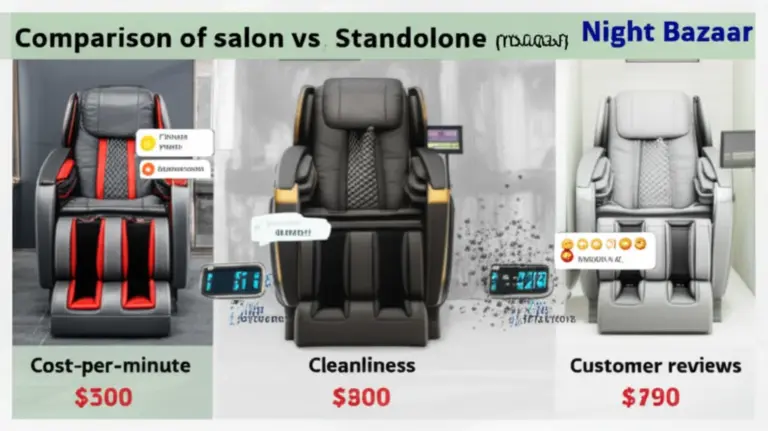
For budget-conscious travelers, the cost-per-minute ratio is paramount. While both options offer a fraction of the cost of a full massage, the minute-by-minute breakdown can vary significantly when comparing salon vs. standalone massage chairs near Night Bazaar.
Salon Chair Pricing Structures
Salons often bundle chair time with other services or offer time blocks (e.g., 30 minutes for 150 THB). If you only need 10 minutes to loosen up before dinner, you might be forced to pay for a minimum block, artificially inflating your actual cost-per-minute. However, if you stay for the full block, the quality of the machine might justify the price.
Standalone Unit Rates and Promotions
Standalone kiosks excel here. They frequently advertise rates like 10 Baht per minute or offer a specific amount of time for a fixed, low price (e.g., 50 THB for 6 minutes). This pay-as-you-go flexibility is ideal for short breaks. Always check the machine display for the current rate, as these can fluctuate based on the season or time of day.
Deep Dive 2: Hygiene and Maintenance Standards
Hygiene is a paramount concern for health-conscious tourists, especially when sharing equipment frequently used by hundreds of visitors daily. The maintenance protocols are rarely advertised, forcing travelers to rely on visual inspection.
Assessing Cleanliness in High-Traffic Salon Environments
In a salon setting, staff are usually responsible for wiping down surfaces between users. While this provides a baseline level of sanitation, the sheer volume of people near the Night Bazaar means constant turnover. Look for visible cleaning cloths or spray bottles near the chairs. If the environment feels dusty or unkempt, it’s a red flag.
Hygiene Protocols for Standalone Units
Standalone kiosks often rely on the user to be conscientious, or they might have a dedicated attendant who cleans periodically. The key difference here is the quality of the surface material. High-end kiosks might use easier-to-clean vinyl or faux leather. If you notice sticky residue or heavily worn head/neck pads, avoid it immediately. For ultimate peace of mind, always carry a small packet of disposable seat covers, especially when using pay-per-minute public machines.
Deep Dive 3: Customer Experience and Review Comparison
The technology within the chair itself dictates the quality of the massage. Reviews frequently highlight differences in programming and customization capabilities.
Comfort and Customization Levels
Salon chairs, due to higher investment costs, often feature more advanced rollers, better S-track or L-track systems, and more sophisticated heat elements. They usually offer detailed remote controls allowing you to pinpoint pressure on the lower back or neck. Standalone units, conversely, often run on pre-set, non-customizable programs designed for general use. They might be louder or less effective on deeper muscle knots.
Analyzing User Feedback Near Tourist Hubs
Online reviews for chairs near major tourist spots like the Night Bazaar often praise the convenience but frequently criticize the lack of deep tissue manipulation in the automatic models. Travelers generally report higher satisfaction with the *atmosphere* of salon chairs, even if the massage mechanism is similar, because the surrounding environment is calmer. For standalone units, reviews are polarized: either ‘perfect quick fix’ or ‘too aggressive/loud.’
Review Consensus
When comparing salon vs. standalone massage chairs near Night Bazaar, salons usually win on perceived luxury and environment, while kiosks dominate in terms of immediate access and granular cost control.
Strategic Decision Making: Which is Right for Your Itinerary?
Making the final call requires aligning the service with your immediate need. Are you recovering from hours of shopping, or do you just need a 5-minute shoulder stretch before catching a taxi?
If you prioritize the overall relaxation experience, even for a short session, seek out the chairs located inside established massage businesses or small cafes near the bazaar perimeter. If you are pressed for time, need minimal commitment, and are willing to sacrifice deep customization for immediacy, the dedicated standalone kiosks are your best bet. Regardless of your choice, always inspect the chair pad before sitting down.
To get a better sense of the modern massage technology available in Thailand, watch this overview of advanced chair features often found in more premium settings:
คำถามที่พบบ่อย (FAQ)
Are salon massage chairs near the Night Bazaar generally cleaner than standalone units?
Not necessarily, but they benefit from institutional accountability. Salon staff are usually tasked with cleaning, whereas standalone kiosks rely on intermittent cleaning or user behavior. Visual inspection of the contact points is the most reliable indicator for both types.
What is the typical cost range per minute for a massage chair in the tourist areas of Chiang Mai?
Standalone units often run between 5 to 10 Thai Baht per minute. Salon chairs may appear cheaper on a per-minute basis if you purchase a longer package, but the minimum entry price is usually higher.
Can I expect similar massage programs in both salon and standalone chairs?
Generally, salon chairs (being more expensive investments) offer superior customization, including pinpoint targeting for neck or lumbar areas. Standalone units typically run on 3-5 basic, non-adjustable programs designed for broad appeal.
Is it better to use a chair before or after a full Thai massage?
It is best used as a supplementary treatment. If you have just had a deep tissue massage, the chair might overwork already stimulated muscles. Use it before a full massage to warm up the muscles, or after a day of walking to relieve foot and leg fatigue.
References
Official Tourism Authority of Thailand Portal
Chiang Mai Night Bazaar Information Center
- Budget Foot Massage 2025: Best Chairs Near Night Bazaar — Where to Find Affordable, Quality Foot Massage Chairs Tonight
- Where to find budget foot massage chairs near Night Bazaar 2025: map, hours, and price ranges
- How to choose the best affordable foot massage chair: features, brands, and what to test before you sit